Karam Tools
Choosing the right product begins with one practical question: what type of cutting fluid is best for drilling steel? The answer depends on drill diameter, steel grade, spindle speed, hole depth, and cooling access. A fluid that performs well on mild steel may struggle with stainless steel. High-speed drilling also creates intense heat around the cutting edges.
Dr. David A. Stephenson, a recognized machining researcher, states, “Cutting conditions determine tool performance; fluid selection must follow them.” This principle guides our comparison of leading Chinese cutting-fluid options. Water-miscible semi-synthetic fluids often provide balanced cooling, chip evacuation, and corrosion protection. Soluble oils can offer stronger lubrication during demanding drilling. Straight oils may reduce friction effectively, but they can increase smoke, cleaning requirements, and operating costs.
In real workshops, concentration matters. A refractometer can reveal whether the mixture is too weak or too strong. Hard water may also reduce stability and create deposits inside the system. Keep the sump clean. That detail is easy to neglect.
For general steel drilling, a high-quality semi-synthetic fluid is often the most practical starting point. Stainless steel may require stronger lubricity and extreme-pressure additives. Still, no formula wins every shop. Tool wear, burr formation, odor, and surface finish should be checked during a controlled trial. Product data sheets and safety documentation remain essential. Our recommendations should be tested, not accepted blindly. The best Chinese cutting fluid is the one that fits your equipment, water quality, production rhythm, and maintenance habits.
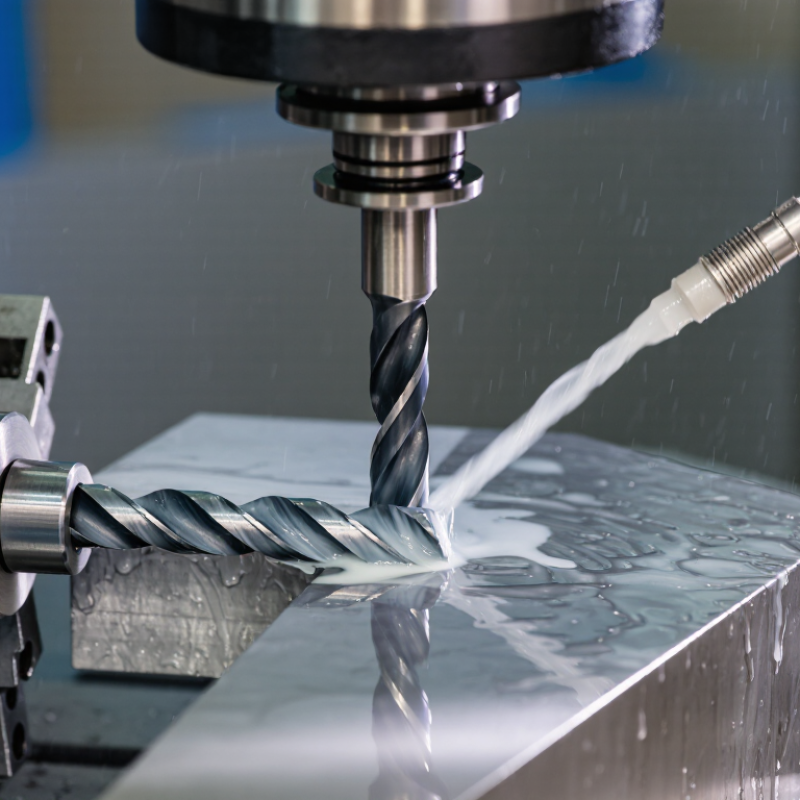
A cutting fluid for drilling steel must balance cooling, lubrication, corrosion protection, and cleanliness. High-speed drilling creates heat around the cutting edge, especially in deep holes. A water-miscible semi-synthetic fluid often offers practical cooling with adequate lubricity. For heavy drilling, a soluble oil may reduce torque more effectively. The correct choice depends on speed, feed, hole depth, and steel hardness.
Concentration matters. Many machining-fluid guides recommend checking dilution with a refractometer, not by appearance. A typical starting range is 5–10%, but the machine supplier’s data should control the final setting. The U.S. Department of Energy’s Metalworking Fluid Management Best Practice Guide reports that poor fluid control can make operating costs several times higher than purchase costs. That includes disposal, maintenance, rejects, and downtime. It is easy to ignore these costs.
A suitable fluid should resist foam, separate tramp oil, and protect freshly drilled steel from flash rust. ISO 6743-7 provides a useful classification framework for metalworking fluids, while NIOSH guidance stresses ventilation and exposure control. Keep the sump clean. Measure pH weekly. Check concentration every shift during heavy production. I would not choose a fluid only because it feels slippery. That approach has failed in real workshops. A low-foam formula may cool well but provide weak tool life. An aggressive extreme-pressure package may improve drilling yet complicate wastewater management. The best selection is proven through torque, tool wear, hole quality, and fluid stability tests on the actual steel grade.
Steel drilling creates heat at the cutting edge and packs chips inside deep holes. The right fluid reduces friction, supports chip removal, and limits rust on the workpiece.
Soluble oil is a practical choice for general workshop drilling. It mixes with water and provides dependable cooling with moderate lubrication. Semi-synthetic fluid offers cleaner operation, better biological stability, and stronger corrosion protection. It suits production lines with repeated drilling cycles. Fully synthetic fluid gives excellent cooling and a clear working area. However, its lubrication may be insufficient for heavy drilling or low-speed operations.
Straight cutting oil delivers strong lubrication for tough steel, large diameters, and slow cutting speeds. It works well when cutting pressure is high. Yet, it can create smoke, increase cleanup time, and require careful ventilation. For small holes or high-speed drilling, a water-mix fluid often performs better. Not always.
In shop-floor trials, concentration matters as much as fluid type. A weak mixture may cause rust and poor tool life. An overly strong mixture can leave residue and raise costs. Operators should check water hardness, fluid temperature, tool coating, and chip shape.
A common mistake is choosing the most expensive fluid without testing the actual steel grade. No single type wins every job. Trial records, regular concentration checks, and visible tool wear provide more reliable guidance than appearance alone.
For drilling steel, compare cutting fluids by measured performance, not appearance or price. Water-miscible fluids usually provide stronger cooling, while semi-synthetic fluids often improve lubrication and cleanliness. Pure oils can reduce friction, but their heat removal is weaker. Grand View Research’s 2024 industry report values the global metalworking fluids market at more than US$14 billion, showing how widely these solutions are used. However, market size does not prove suitability for your drill press.
Run controlled tests with identical steel grades, drill diameters, feed rates, and fluid concentrations. Record tool wear, hole surface roughness, cutting temperature, foam height, and fluid consumption. ASTM D4172 can help assess anti-wear performance. ASTM D665 measures rust protection, while ASTM D130 checks copper corrosion. For compatibility, also test water hardness, pH stability, seal materials, machine paint, and bacterial odor. ISO 6743-7 provides a useful classification framework for industrial metalworking fluids. A fluid that performs well in soft water may separate in hard water. That problem is easy to miss.
Tips: Keep concentration within the supplier’s tested range, usually with a calibrated refractometer. Check the fluid after one week and after repeated drilling cycles. NIOSH guidance links poorly managed metalworking fluids with skin and respiratory risks, so ventilation and fluid hygiene matter. Low foam is not always better. Excessive lubrication may improve tool life but leave oily holes. My practical view is cautious: laboratory data helps, but a short production trial remains necessary.
China Top Cutting Fluid for Drilling Steel Which Type Is Best?
Best Cutting Fluid Selection for Different Steel Drilling Conditions
The best cutting fluid depends on steel grade, drill speed, hole depth, and cooling access. For mild steel and medium-speed drilling, a water-miscible semi-synthetic fluid often balances cooling, lubrication, and chip removal. A typical working concentration ranges from 5% to 10%, but the supplier’s technical sheet must guide adjustment. Too lean can increase rust and tool wear. Too rich may create foam and leave residue.
Stainless steel needs stronger boundary lubrication because it work-hardens quickly. A chlorine-free fluid with suitable extreme-pressure additives can reduce torque and built-up edges. For slow drilling, deep holes, or limited coolant flow, neat oil may perform better. It provides stronger lubrication, but heat removal becomes weaker. Watch the hole wall.
The U.S. NIOSH criteria document recommends controlling metalworking-fluid aerosol exposure around 0.4 mg/m³ as thoracic particulate mass over a 10-hour workday. Ventilation and fluid maintenance therefore matter as much as cutting performance. Grand View Research estimated the global metalworking fluids market at about USD 14.75 billion in 2023, showing the sector’s scale, not a universal product choice. In practice, I would test two concentrations, measure tool life, inspect burrs, and check corrosion after 24 hours. One result can mislead.
Choosing a cutting fluid for drilling steel depends on heat control, lubrication, water quality, and machine conditions. In many workshops, a water-miscible semi-synthetic fluid offers balanced cooling and rust protection. However, the best type still requires a controlled trial with the actual drill, steel grade, and feed rate.
Safe handling starts before mixing. Read the supplier’s safety data sheet and wear splash goggles, gloves, and protective clothing. Add concentrate to clean water, not water to concentrate. Measure concentration with a refractometer each shift. Keep the fluid between the recommended range. Too weak may encourage corrosion and microbial growth; too strong may cause skin irritation, foam, or poor tool performance. Ventilation matters. So does cleanliness.
Inspect the sump weekly. Remove chips, floating oil, and sludge before they spread through the system. A sour smell, dark color, or sudden foam can signal contamination. Drain and clean the tank according to the fluid’s instructions. Never top up blindly. I have seen operators correct low levels without checking concentration, creating a thicker and less stable mixture. That shortcut saved minutes and caused hours of correction. Store unopened containers sealed, upright, and away from sunlight, freezing temperatures, and ignition sources. Label every mixed container with its date and concentration. Keep old and new fluids separate. Small records help reveal recurring problems. 天天中彩票有
| Cutting Fluid Type | Typical Working Concentration | Suitability for Drilling Steel | Main Advantages | Limitations and Risks | Safe-Use Requirements | Maintenance and Storage |
|---|---|---|---|---|---|---|
| Soluble-Oil Emulsion | Usually 3–8% concentrate in water; follow the fluid supplier’s technical data sheet. | Recommended General-purpose drilling of mild, carbon, and low-alloy steels. |
Good cooling, adequate lubrication, economical operation, and corrosion protection when correctly mixed. | Can support bacterial or fungal growth if contaminated; excessive concentration may increase residue and skin exposure. | Use gloves, safety glasses, protective clothing, and suitable ventilation. Add concentrate to water, not water to concentrate. | Check concentration with a calibrated refractometer, remove tramp oil, and keep the sump free of chips. Store sealed, above freezing, and away from direct sunlight. |
| Semi-Synthetic Fluid | Commonly 2–6% concentrate in water; the correct range depends on the formulation and operation. | Recommended High-volume steel drilling and operations requiring cleaner equipment and longer fluid life. |
Balanced cooling and lubrication, relatively clean running, good biological stability, and reduced residue compared with many emulsions. | May cause foaming with soft water, excessive agitation, or contaminated systems; concentration that is too low can reduce corrosion protection. | Avoid direct skin contact and mist inhalation. Use local extraction where high-speed drilling produces airborne mist. | Monitor concentration, pH, odor, and appearance. Maintain clean make-up water and store between approximately 5–35°C in a dry, frost-protected area. |
| Fully Synthetic Water-Based Fluid | Often 1–5% concentrate in water, depending on the product and machining severity. | Conditional High-speed drilling where cooling, low residue, and visibility are important. |
Excellent heat removal, low oil residue, good visibility of the work area, and generally good resistance to rancidity. | May provide less boundary lubrication than an oil-containing fluid during severe drilling; some formulations can foam or irritate skin. | Use eye and skin protection and prevent mist accumulation. Do not mix with unrelated fluid chemistries without compatibility testing. | Check concentration and pH according to the supplier’s instructions. Keep the container closed and protect it from freezing and excessive heat. |
| Straight Cutting Oil | Used neat; no water dilution unless specifically permitted by the formulation. | Specialized Deep-hole, low-speed, or heavy-duty drilling where maximum lubrication is more important than cooling. |
Strong lubricating film, effective chip evacuation in suitable applications, and good performance under high contact pressure. | Higher fire and smoke risk than water-based fluids; poorer heat removal and greater cleaning requirements. | Use ventilation, avoid ignition sources, and wear chemical-resistant gloves and eye protection. Follow the fluid’s fire-safety classification. | Keep containers tightly closed, clean spills promptly, and prevent contamination with water or incompatible oils. Store in a cool, ventilated area. |
| High-Lubricity EP Water-Miscible Fluid | Typically 4–10% concentrate in water, depending on drilling load and formulation. | Recommended Large-diameter, deep, interrupted, or high-load drilling in tougher steels. |
Improved extreme-pressure and boundary lubrication, reduced torque, and better protection against tool-edge wear in demanding cuts. | Some formulations may generate more odor, foam, or residue; additives can be sensitive to water quality and contamination. | Use the recommended concentration and PPE. Avoid uncontrolled addition of sulfur, chlorine, or other additives. | Check concentration, pH, odor, and tramp-oil level routinely. Do not store in unlabelled containers; keep away from food, heat, and direct sunlight. |
It should cool the cutting edge, reduce friction, prevent rust, and keep the machine clean. Deep holes need stronger heat control.
A water-miscible semi-synthetic fluid often provides balanced cooling and lubrication. Heavy drilling may need soluble oil for lower torque.
Use a refractometer instead of judging the mixture by appearance. A 5–10% range may be a starting point, but machine instructions control the final setting.
A weak mixture may encourage rust and microbial growth. A strong mixture may cause irritation, foam, or poor tool performance. Balance is easy to miss.
Check concentration every shift during heavy production. Measure pH weekly and inspect the sump at least weekly.
Sour smells, dark color, sudden foam, floating oil, and sludge are warning signs. Remove chips and oil quickly.
Read the safety data sheet and wear goggles, gloves, and protective clothing. Add concentrate to clean water. Never reverse the order.
Test it with the actual steel grade, drill, speed, feed, and hole depth. Compare torque, tool wear, hole quality, and fluid stability. A slippery feel proves very little.
Selecting the right cutting fluid is essential for efficient, accurate, and safe steel drilling. The best option depends on the steel grade, drilling speed, hole depth, tool material, and cooling requirements. Water-based fluids provide effective cooling and are suitable for high-speed operations, while neat oils offer stronger lubrication for heavy loads, slow drilling, and difficult-to-machine steel. Semi-synthetic fluids can provide a practical balance between cooling, lubrication, cleanliness, and corrosion protection.
To determine what type of cutting fluid is best for drilling steel, users should compare heat control, friction reduction, tool life, surface finish, rust protection, and compatibility with equipment and workpieces. Proper concentration, filtration, and regular maintenance help prevent bacterial growth, contamination, and performance loss. Cutting fluids should be stored in sealed, clearly labeled containers away from excessive heat and direct sunlight. Safe handling also requires suitable protective equipment, good ventilation, and compliance with workplace safety procedures.
