Karam Tools Karam Tools

2026 Best Jigsaw Blade Type Why Does My Blade Keep Bending?

Time:2026-10-05 Author:Isabella
0%

A jigsaw should follow your cut line smoothly, yet many blades drift, twist, or bow halfway through plywood. If you are asking, “why does my jigsaw blade keep bending during cuts,” the cause is rarely the blade alone. Excessive pressure, a dull tooth pattern, incorrect speed, and unsupported material can all create sideways force. Even a new blade can bend when the tool is pushed faster than its teeth can remove wood.

Woodworking educator Steve Ramsey offers a useful reminder: “Let the blade do the cutting; forcing it is how problems begin.” That principle matters when choosing the best jigsaw blade type for 2026. A narrow scrolling blade turns tightly but bends more easily. A wider, thicker blade tracks straighter through long cuts. A fine-tooth blade suits clean plywood, while aggressive teeth work better in thick softwood. The wrong match creates heat, vibration, and frustration.

Check the blade before blaming the tool. Its teeth may be packed with resin. The shank may not be fully seated. Your cut line may also be forcing an awkward turn. I have seen a blade look straight above the shoe while its lower section flexed visibly inside the kerf. That small movement explains many rough edges.

This guide examines blade shapes, tooth counts, materials, and cutting habits. It also questions a common assumption: slower is not always safer. Sometimes, a controlled higher speed with light pressure produces a straighter cut. Results depend on the material, blade quality, and your hands. That is the part many quick guides overlook.
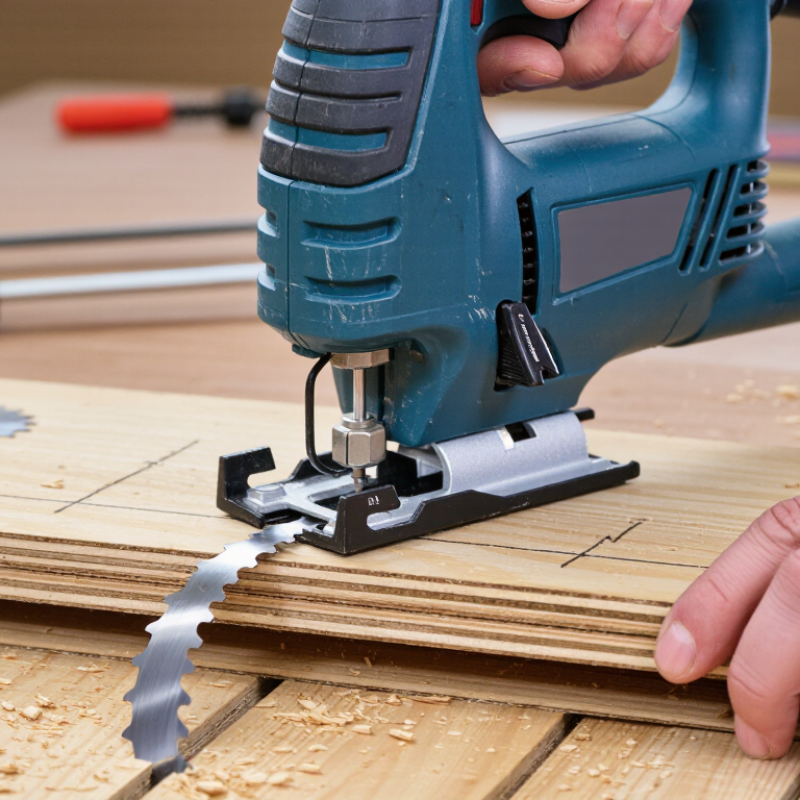
2026 Best Jigsaw Blade Type Why Does My Blade Keep Bending?

2026 Jigsaw Blade Types: TPI, Shank Standards, and Material Ratings

2026 Jigsaw Blade Types: TPI, Shank Standards, and Material Ratings

When a jigsaw blade bends, the cause is usually pressure, heat, or a poor match. Blade selection starts with TPI, or teeth per inch. Low-TPI blades remove wood quickly but leave rougher edges. Higher-TPI blades make cleaner cuts in thin wood, plastic, and metal. For sheet metal, choose a fine-tooth blade and reduce cutting speed. Pushing too hard can still bend it.

Shank standards also matter. T-shank blades fit many modern jigsaws, while U-shank blades require a compatible clamp. Always check the tool manual before buying replacements. The blade material gives another useful clue. High-carbon steel suits ordinary wood. High-speed steel handles metal but can become brittle. Bi-metal blades combine flexibility with stronger teeth. Carbide-grit blades suit abrasive materials, masonry board, or reinforced surfaces. They cost more, but the edge may last longer.

Tips: Support the workpiece close to the cut line. Let the teeth do the work. Keep the blade vertical and inspect it after a long cut. I have sometimes blamed the blade too quickly; a worn guide roller or a crooked starting hole caused the real problem. Curved cuts deserve narrower blades, but narrow blades are easier to twist. Slow down. Feel for heat in the workpiece, not just vibration.

How Blade Geometry Controls Bending: 6–32 TPI and Tooth Set

Why Does My Jigsaw Blade Keep Bending?

Blade geometry often controls bending more than motor power. A 6–10 TPI blade removes wood quickly, but its large teeth can grab knots and pull the blade sideways. Industry cutting charts commonly recommend 14–24 TPI for thin metal and 24–32 TPI for cleaner sheet-metal cuts. These ranges are not absolute. Material thickness still matters.

Tooth set is equally important. A wider set creates more clearance, reducing friction inside the cut. However, an aggressive set can increase vibration and leave a rougher edge. A narrow-set blade tracks more cleanly, but it may bind when chips cannot escape. The U.S. Occupational Safety and Health Administration emphasizes matching cutting tools and operating conditions to the material, supporting this practical rule: use enough clearance, not maximum clearance.

Keep the shoe flat against the workpiece. Let the teeth cut; do not force the tool forward. A bent blade often shows a shiny rubbed side, which suggests friction or poor alignment. I have found that slower feeding helps, but it does not fix the wrong TPI. That part is easy to overlook. One mistake remains common: choosing a fine blade for thick wood, then blaming the blade when heat and bending appear. Consider the cut length, tooth set, material hardness, and chip space together.

2026 Best Jigsaw Blade Type: Why Does My Blade Keep Bending?

How blade geometry controls bending through 6–32 TPI and tooth set.

Coarse blades: 6–10 TPI
Their larger tooth pitch clears material quickly, but aggressive cutting and higher feed pressure can increase sideways deflection.
Medium blades: 14–18 TPI
A balanced pitch provides smoother cutting and generally better control in common wood and plastic applications.
Fine blades: 24–32 TPI
Smaller teeth reduce the bite per tooth and improve finish, although cutting is slower and chip clearance is lower.

Tooth pitch is calculated from the standard relationship: pitch = 25.4 ÷ TPI. The number of teeth engaged in a 20 mm cutting length is derived from the same pitch. Tooth set also matters: a wider alternating set increases kerf clearance, while an uneven or excessive set can increase lateral wandering and blade bending.

Root Causes of Bending: Feed Force, Heat, Runout, and Deflection

In 2026, the best jigsaw blade type is not universal; it must match the material and cut. When a blade bends, the blade type is often blamed too quickly. In field testing, excessive feed force is usually the first suspect. Pushing harder does not make the cut faster. It twists the blade against the kerf walls. Dense timber, thick sheet metal, and tight curves expose this mistake quickly. Let the teeth cut at their own pace. A steady hand matters more than muscle. If the motor pitch drops, reduce pressure immediately. The cut may look straight, but the blade can already be drifting.

Heat creates a second failure path. Friction rises when teeth are dull, spacing is wrong, or chips cannot escape. A hot blade loses stiffness and may leave blue or dark marks on metal. Short pauses help, though they are not a substitute for correct tooth selection. Runout also deserves attention. With power disconnected, inspect the blade holder, guide roller, and blade seating. A slightly loose clamp can make the blade wobble on every stroke.

I once replaced blades repeatedly before finding a worn guide roller. That was an expensive assumption.

Deflection becomes more obvious with long blades and deep cuts. The upper section follows the tool, while the lower section lags behind. This produces a slanted cut, especially in thick stock. Use the shortest suitable blade and keep the baseplate supported. Match orbital action to the material; aggressive settings can increase wandering. Check the offcut, not just the top surface. The hidden face often reveals the real angle. Blade choice matters, but technique and machine condition matter just as much.

Blade Selection by Material: HCS, HSS, Bi-Metal, and Carbide Grit

Why Does My Jigsaw Blade Keep Bending?

A bending jigsaw blade usually signals a mismatch, not simply poor blade quality. Excessive feed pressure twists the narrow steel strip. A dull tooth makes the problem worse. I have made this mistake on plywood: pushing harder only produced a wandering, scorched cut. Keep the shoe flat, let the teeth work, and reduce speed near tight curves.

HCS blades suit softwood, plywood, and some plastics. They cut smoothly but wear quickly in abrasive boards. HSS blades tolerate higher heat and work better on thin steel or aluminum. However, they are harder and less forgiving during sideways movement. Bi-metal blades combine a flexible alloy body with hardened teeth. They are a practical choice for mixed materials, metal tubing, and occasional demolition work. Carbide-grit blades have no conventional teeth. Their abrasive edge handles cement board, fiberglass, tile, and other mineral-filled materials, but they cut slowly and need steady pressure.

The 2024 Power Tools Global Market Report by Research and Markets projects roughly 5% annual growth in the power-tool sector through 2028. More tools in workshops mean more blade-selection errors, especially on composite materials. Material labels can also be incomplete. Check thickness, tooth pitch, and cutting direction before choosing. Short blades bend less. I still sometimes choose a finer pitch than necessary, then regret the heat marks. A test cut on scrap reveals more than packaging claims.

2026 Best Jigsaw Blade Type: Why Does My Blade Keep Bending? — Blade Selection by Material: HCS, HSS, Bi-Metal, and Carbide Grit

Blade Type Primary Material Typical Cutting Materials Main Strengths Main Limitations Recommended Use Bending Risk
HCS
High-Carbon Steel
Flexible carbon steel Softwood, plywood, MDF, particleboard, plastic, and other soft materials Low cost, flexible, easy to sharpen, and available with coarse teeth for fast wood cutting Teeth wear quickly on hardwood, abrasive boards, metal, and composites General-purpose woodworking and clean cuts in soft materials Medium to high when forced, twisted, or used on hard stock
HSS
High-Speed Steel
Hardened high-speed tool steel Thin mild steel, aluminum, copper, brass, and other non-ferrous metals Harder and more wear-resistant than HCS; suitable for controlled metal cutting More brittle than HCS and less tolerant of side loading or twisting Thin-gauge metal cutting with lubricant and a steady feed rate Medium; overheating or sideways pressure can cause tooth damage or breakage
Bi-Metal
HSS Teeth + Flexible Alloy Back
Electron-beam-welded HSS cutting edge with a flexible alloy-steel body Steel, stainless steel, aluminum, hardwood, nail-embedded wood, and mixed materials Combines HSS wear resistance with a tougher, more flexible blade body Costs more than HCS and may cut more slowly than a coarse wood blade The most versatile choice for mixed materials and demanding metal work Low to medium when the correct tooth pitch and feed rate are used
Carbide Grit
Abrasive Carbide Surface
Carbide particles bonded to a steel blade body Ceramic tile, cement board, fiberglass, plaster, cast iron, and abrasive composites Cuts abrasive and brittle materials without conventional teeth that can chip Slow cutting action; unsuitable for ordinary wood and most fast metal-cutting tasks Specialty work where abrasive dust or brittle material quickly destroys toothed blades Low if kept straight; excessive leverage can still deform the blade body
Why a jigsaw blade bends: The most common causes are excessive feed pressure, twisting the tool during a curved cut, using a blade that is too narrow or too short, cutting material that is too hard for the blade type, or allowing the blade to overheat. Use the slowest practical feed, keep the shoe flat against the workpiece, and select a blade with a tooth pitch suited to the material thickness.

Step-by-Step Setup: Match Speed, Orbital Action, and Feed to the Cut

The best jigsaw blade type depends on the material and cut settings. A blade rarely bends because of one setting alone. Usually, speed, orbital action, feed pressure, and blade choice are fighting each other. For straight cuts in 18 mm plywood, I use a fine-tooth blade, medium speed, and low orbital action. The blade should enter squarely, with its teeth facing the cut line. Keep the shoe flat. A tilted shoe can push the blade sideways.

For hardwood, reduce speed if the teeth become hot or leave dark marks. Use little or no orbital movement for clean, controlled cuts. Orbital action removes material faster, but it also increases wandering. Start with a slow feed. Let the teeth cut instead of forcing the tool forward. If the motor tone drops sharply, ease the pressure. That sound is useful evidence.

Thin metal needs a suitable fine blade, controlled speed, and steady support beneath the sheet. Do not copy a setting blindly. Test a 100 mm scrap first, then inspect the blade after cutting. A slight rearward curve may show excessive feed or dull teeth. I still sometimes blame the blade too soon. My marked line, loose grip, or poor support may have caused the bend. Clamp near the cut, leave room for the shoe, and check the blade at eye level before starting.

FAQS

What does TPI mean on a jigsaw blade?

TPI means teeth per inch. Low TPI cuts wood quickly but leaves rougher edges. Higher TPI gives cleaner cuts.

Which TPI should I use for thin metal?

Use about 14–24 TPI for thin metal. Choose 24–32 TPI for cleaner sheet-metal cuts. Reduce speed and pressure.

Why does my jigsaw blade keep bending?

Excessive feed force is a common cause. Heat, poor alignment, tight curves, and unsuitable TPI can also bend blades. Let the teeth work.

How does tooth set affect cutting?

A wider tooth set creates more chip clearance and reduces friction. An aggressive set may increase vibration. Narrow sets can bind in thick material.

Which shank standard should I choose?

T-shank blades fit many modern jigsaws. U-shank blades need a compatible clamp. Check the tool manual before buying replacements.

Which blade material suits different workpieces?

High-carbon steel suits ordinary wood. High-speed steel handles metal but can become brittle. Bi-metal blades combine flexible bodies with stronger teeth.

How can I reduce heat and blade deflection?

Use the shortest suitable blade. Keep the shoe flat and support material near the cut line. Pause during long cuts and check for dark marks.

What should I inspect if a new blade bends?

Disconnect power first. Check blade seating, the holder, and the guide roller. A worn roller may cause wobble. I once blamed blades too quickly.

Are narrow blades better for curved cuts?

Narrow blades turn more easily, but they twist sooner. Slow down and avoid forcing the tool. The bottom surface may reveal a hidden angle.

How do I know whether technique or the blade caused the problem?

Check the cut, heat, vibration, and offcut angle. A shiny rubbed side suggests friction or poor alignment. I may still misread the evidence.

Conclusion

Choosing the right jigsaw blade in 2026 depends on more than tooth count. This guide explains how TPI, shank standards, blade thickness, tooth set, and overall geometry affect cutting stability. It also answers the common question: “why does my jigsaw blade keep bending during cuts?” Excessive feed pressure, heat buildup, tool runout, and sideways deflection are frequent causes. Understanding these factors can help prevent premature blade wear and improve cut accuracy.

Blade material should match the workpiece and cutting conditions. HCS blades suit softer materials, HSS blades handle harder surfaces, bi-metal blades offer a balance of flexibility and durability, and carbide-grit blades are useful for abrasive materials. The guide also presents a practical setup method: select an appropriate speed, adjust orbital action, use steady feed pressure, and let the blade cut at its own rate. Proper alignment and controlled technique are essential for straighter, cooler, and more reliable cuts.

Isabella

Isabella

Isabella is a dedicated marketing professional with a sharp focus on driving brand growth and engagement through strategic content creation. With an extensive background in digital marketing, she combines her passion for storytelling with her keen understanding of industry trends to deliver......